Turning quiet observers
into active advocates.
A tablet-led exhibit for The Marine Mammal Center, turning curiosity into empathy and measurable donations.
TMMC is a health facility for sea mammals. Daily visitors come to observe, but they leave unmoved.
Improving the visitor experience to build real connection and compassion is crucial to sustaining the center's mission.
The world's largest marine mammal hospital reopened in June 2022. Our job was to make people care.
We focused on the center's social impact, raising awareness of their marine conservation and ocean health work to inspire real action and drive more adoptions.
Cultivate empathy among visitors through captivating narrative, and design impactful call-to-action elements for their experience at The Marine Mammal Center?
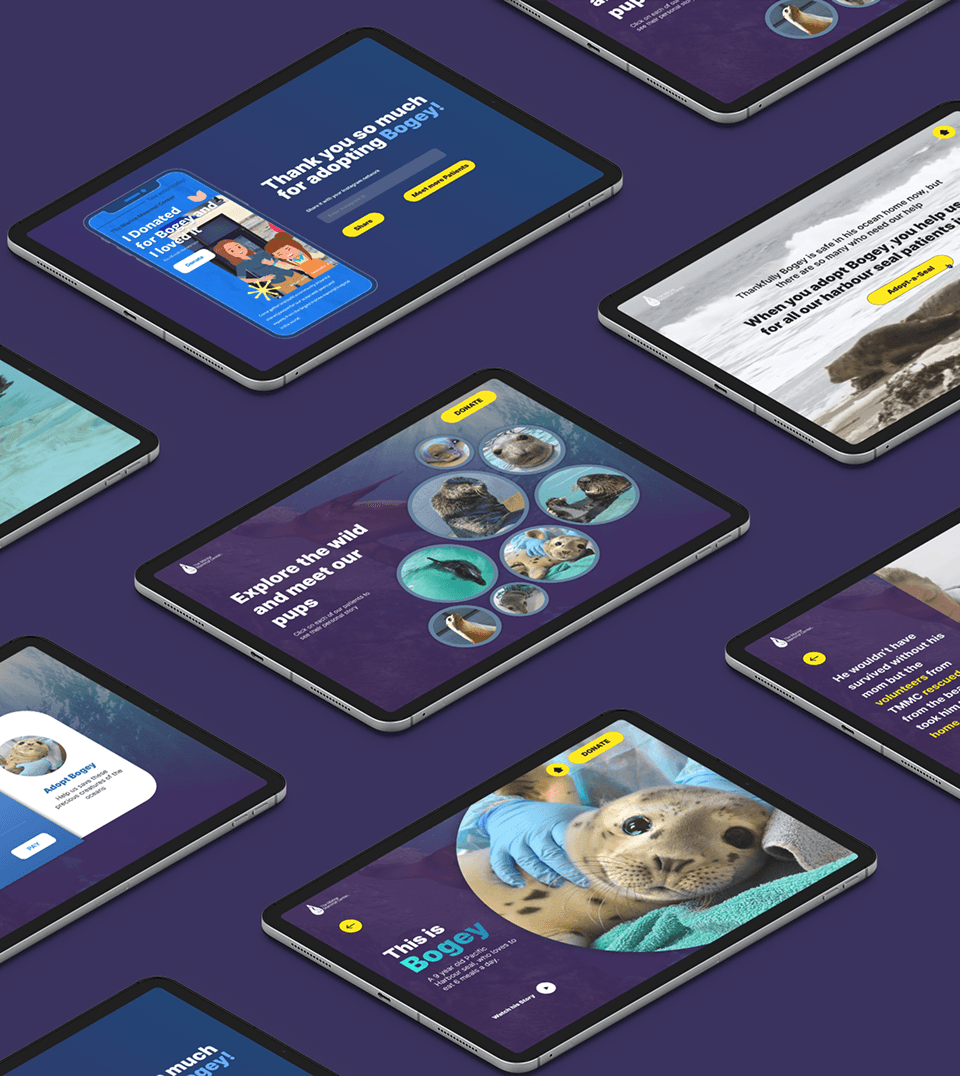
A story-driven tablet, paired with a habitat installation.
Explore the patients' unique stories
Visitors discover star patients' stories by tapping the bubbles, seeing how TMMC rescues animals through personalized choices in the story flow.
Adopt your favorite patients
Moved by the story? A symbolic adoption directly supports marine mammals like Bogey, making a real difference.
Leave with meaningful takeaways
After adopting, visitors get a warm thank-you from patients and the center, along with photos to share or keep as memories.
Habitat installation
An art installation built from real materials showcases the marine mammals' habitat, with tablets embedded in the environment so visitors can explore rescue stories while fully immersed.
Habitat Installation Touchpoint

Habitat Installation

How did we get here?
We ran qualitative and quantitative research with visitors and stakeholders to understand how they see TMMC's mission and goals.
We wanted to see what it's like: the rescue process, what happens once the animal is admitted, and what their diagnosis is.
I flipped over the adoption cards on the fence and saw dates from 10-15 years ago. Are these animals even still here?
We're trying to reverse what human activity has done. Visitors want individual stories, how humans caused it, what NOT to do.
Three pain points visitors face at The Marine Mammal Center.
The center has plenty of learning resources, but the visitor journey leaves too much to chance. Three consistent gaps came up across interviews.
Guidance
Without clear thematic guidance during the visit, it's hard for people to leave with a lasting impression.
Empathy
The current storyline doesn't help visitors understand or feel connected to the mammals.
Donations
Visitors are open to donating, but they want to clearly understand where their money goes and why it matters.
Rapid prototyping, tested with 42 participants.
Five directions explored in parallel, from low-tech pledges to AR and live tracking, each stress-tested against empathy, guidance, and donation outcomes.


Story Dashboard + Art Installation.
Chosen based on time and budget constraints. From research, we grounded the experience in real-life stories (age, species, diagnosis, rescue and release locations) so every tap brings a visitor closer to one animal's journey.