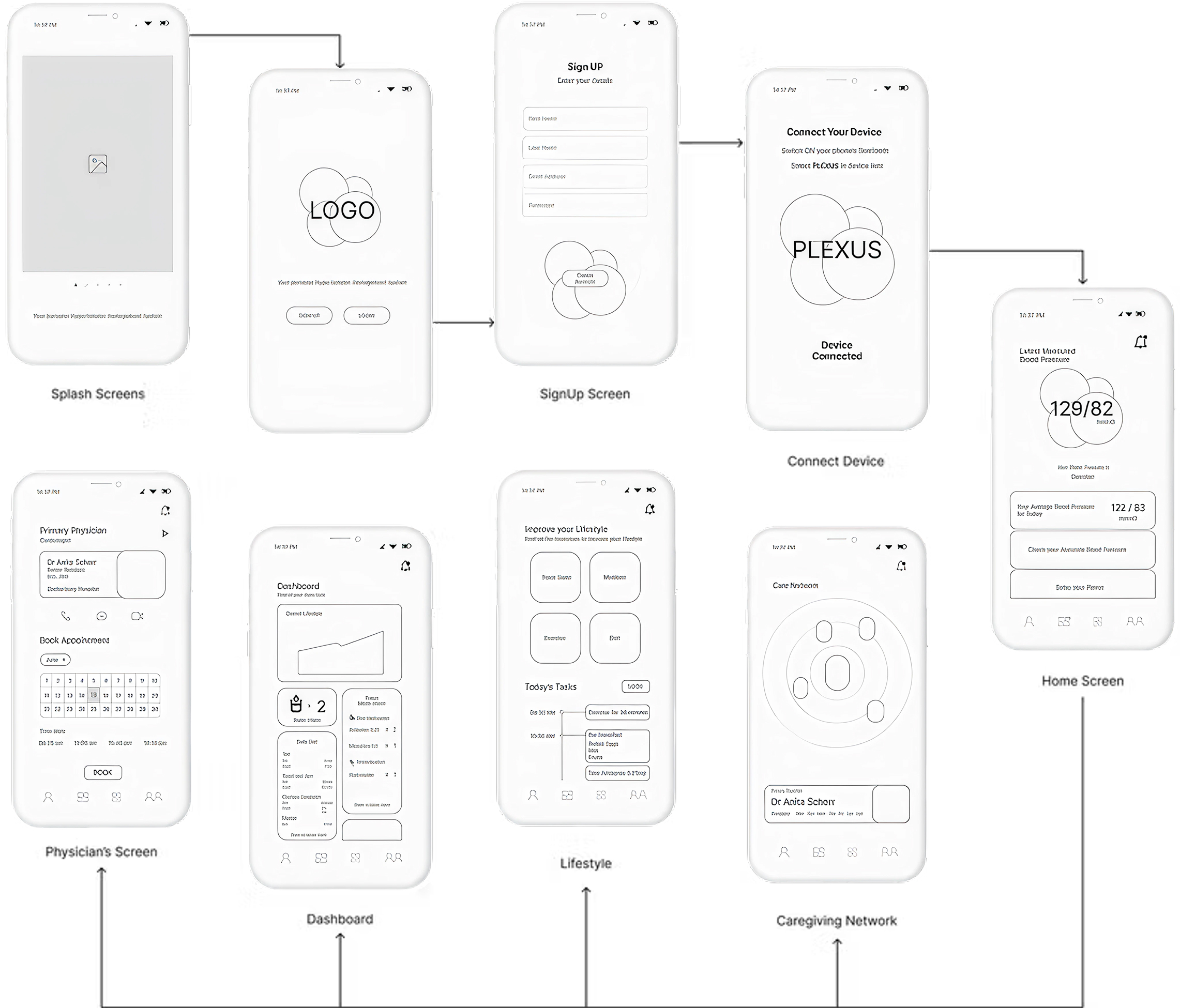
Journey Mapping
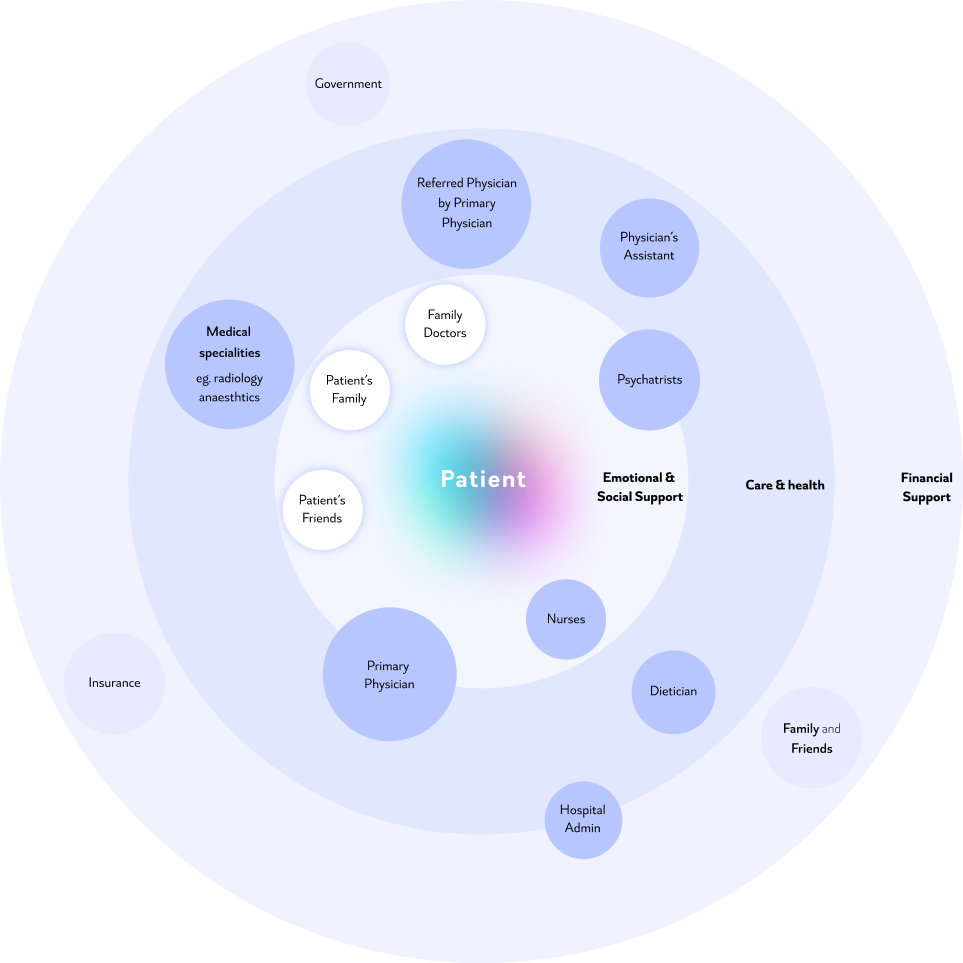
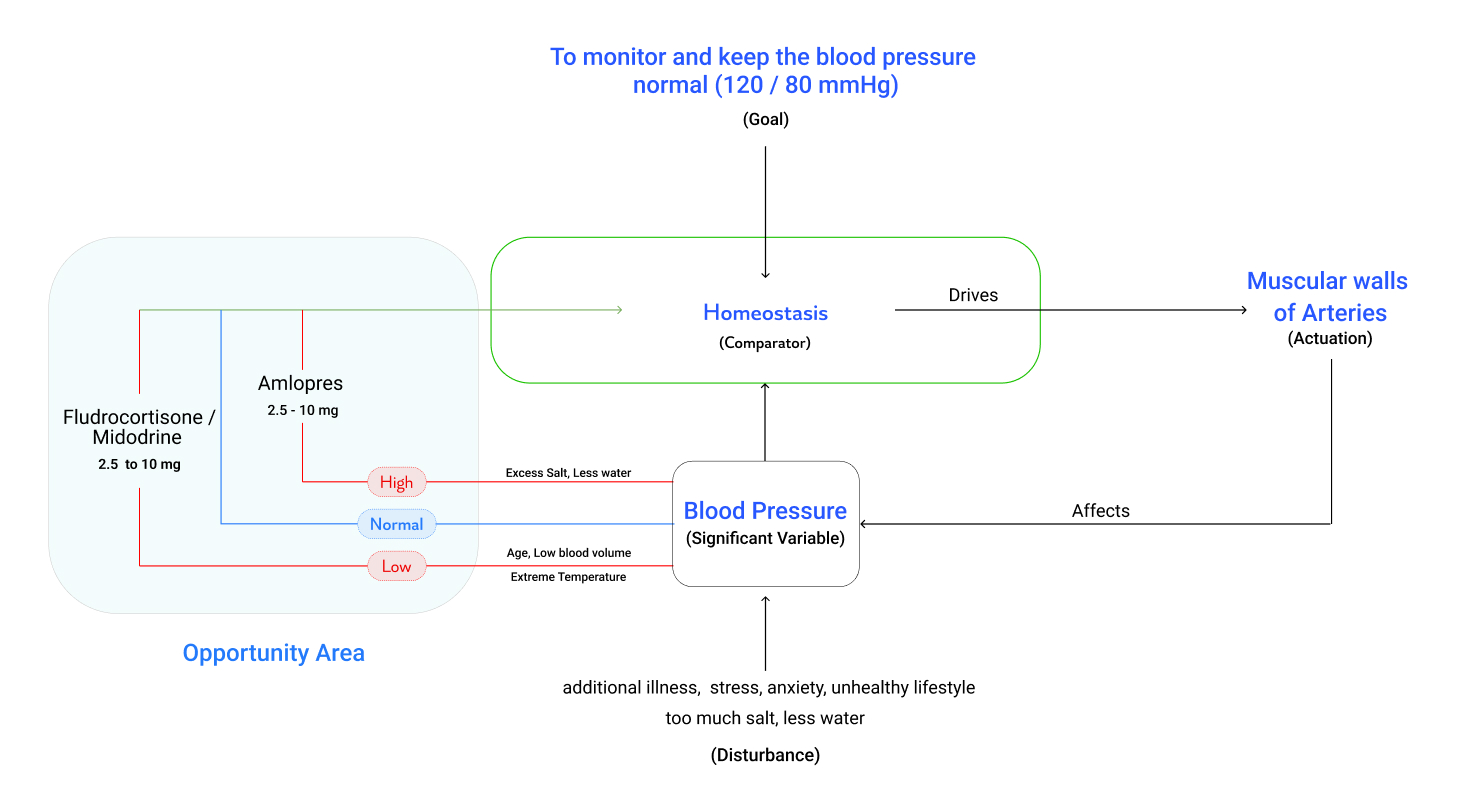
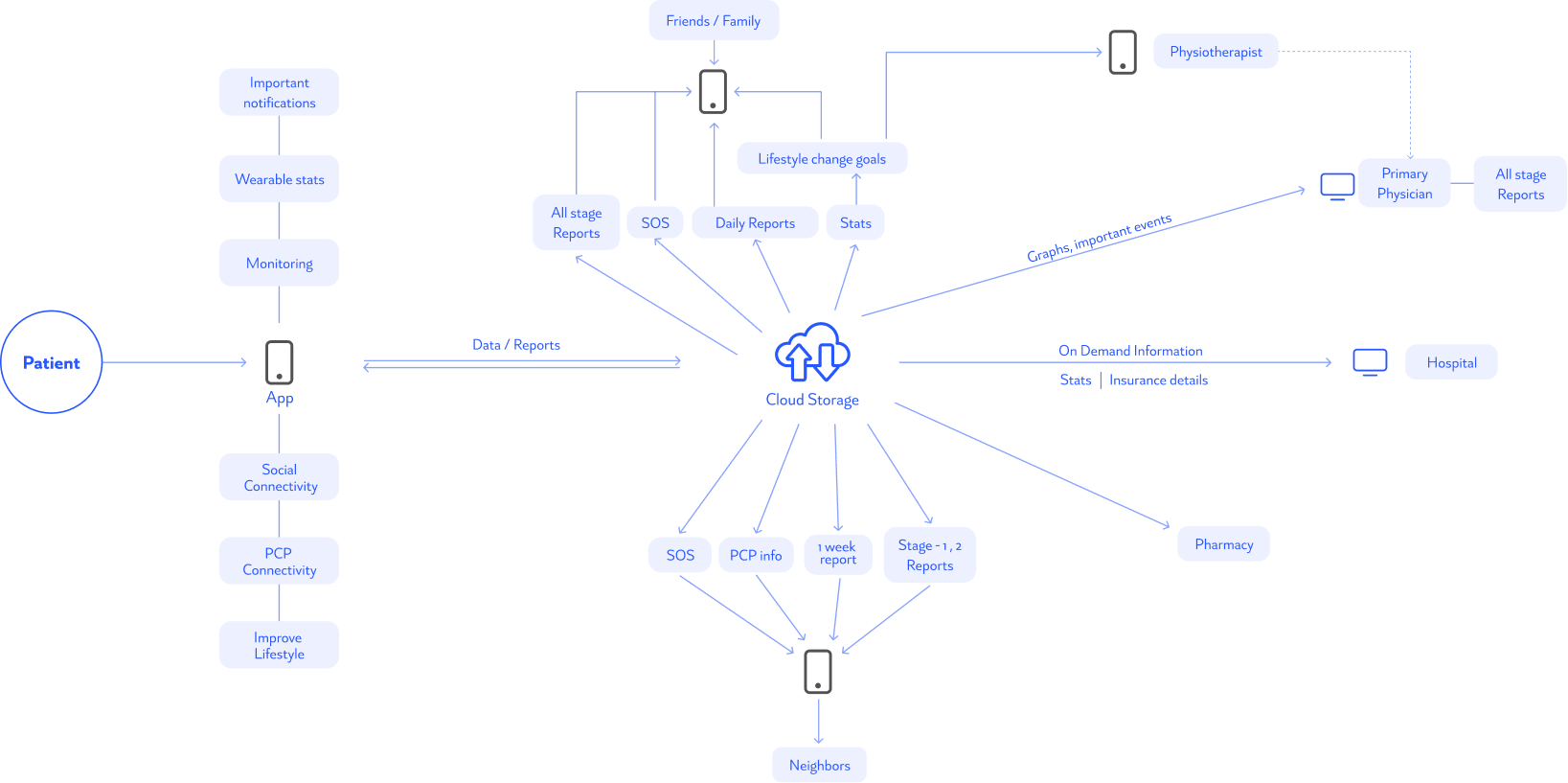
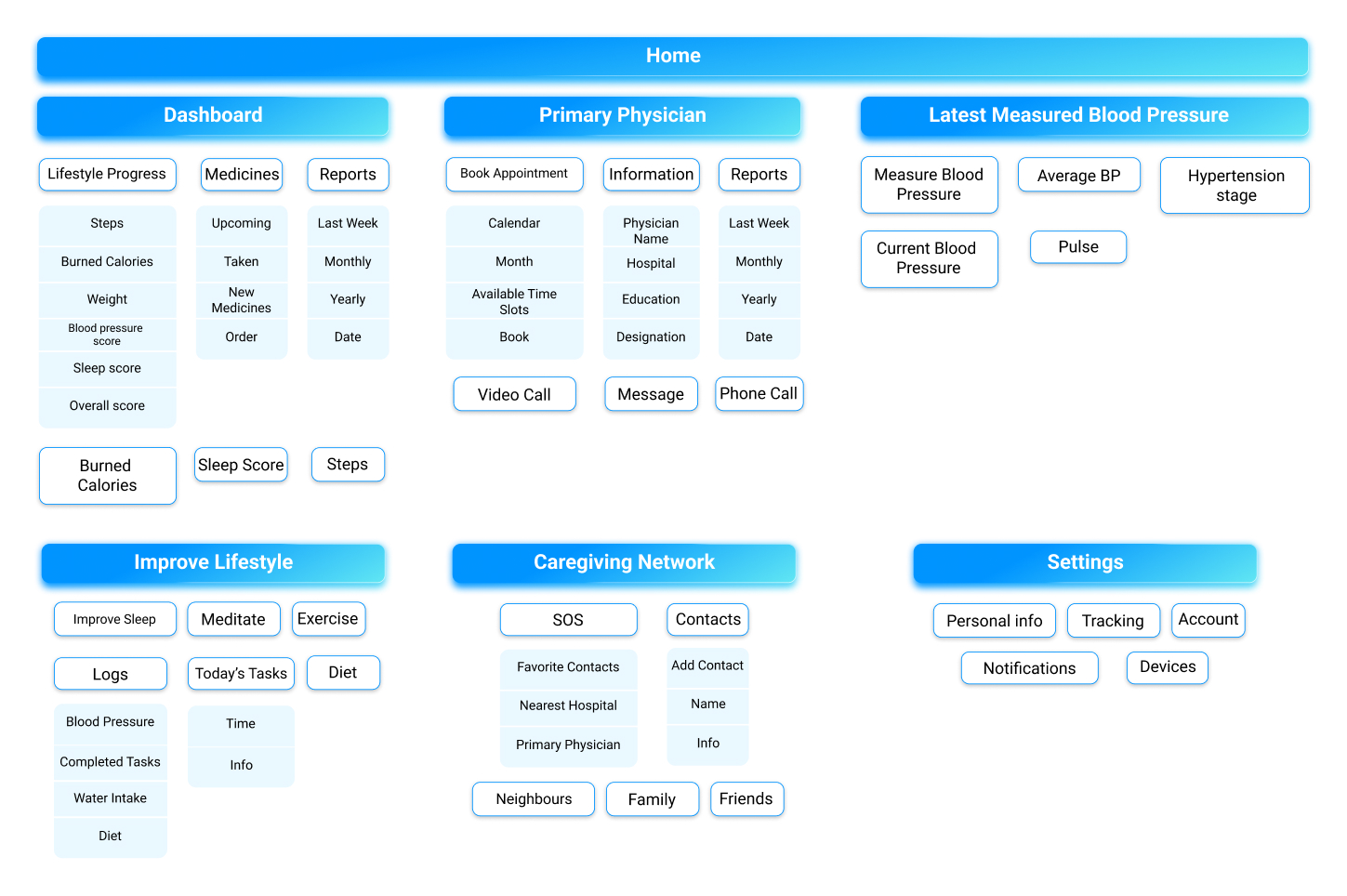
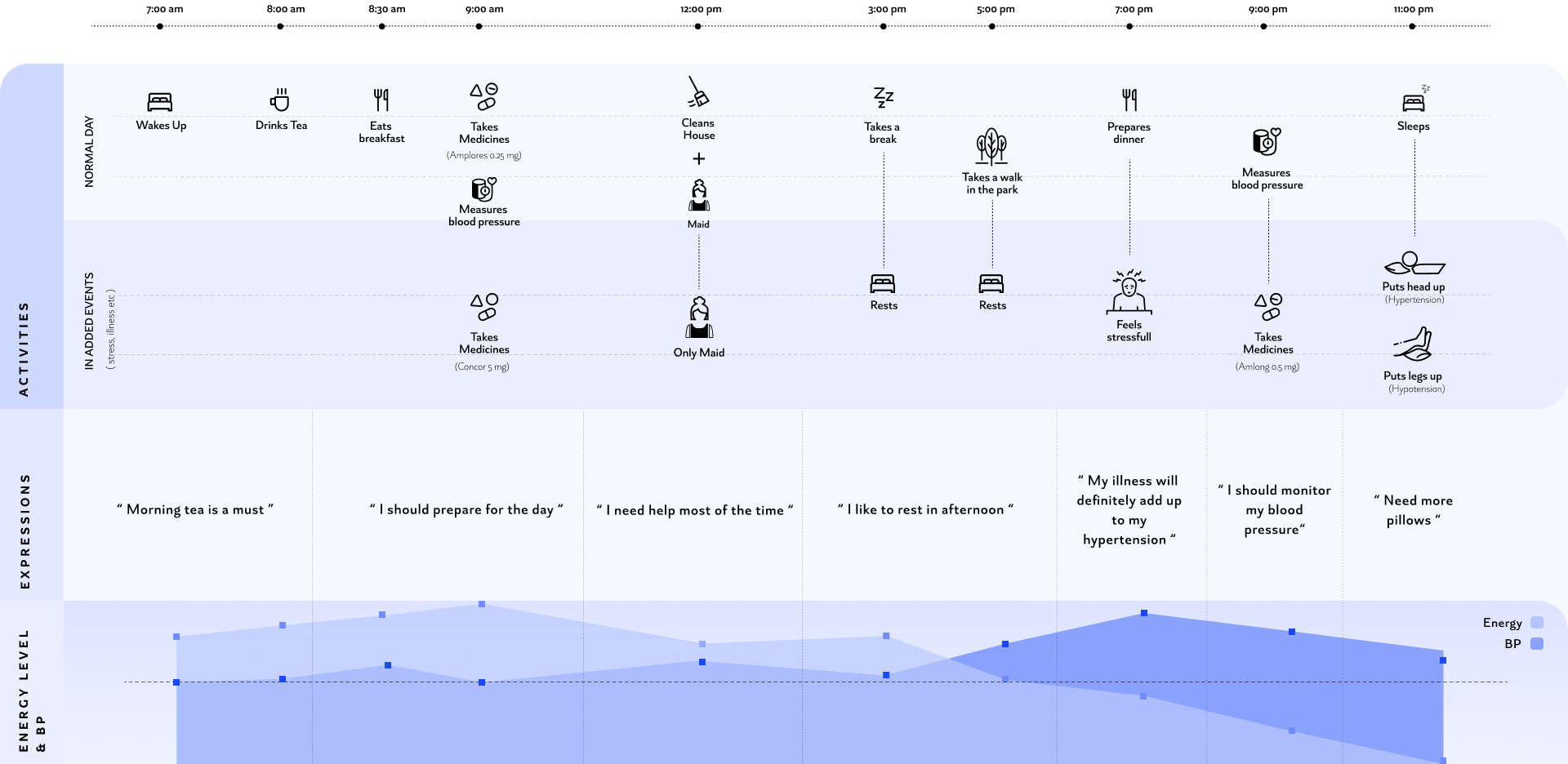
Mapping the full hypertension ecosystem - patient, physician, family, lifestyle, data loops - before designing any screens.
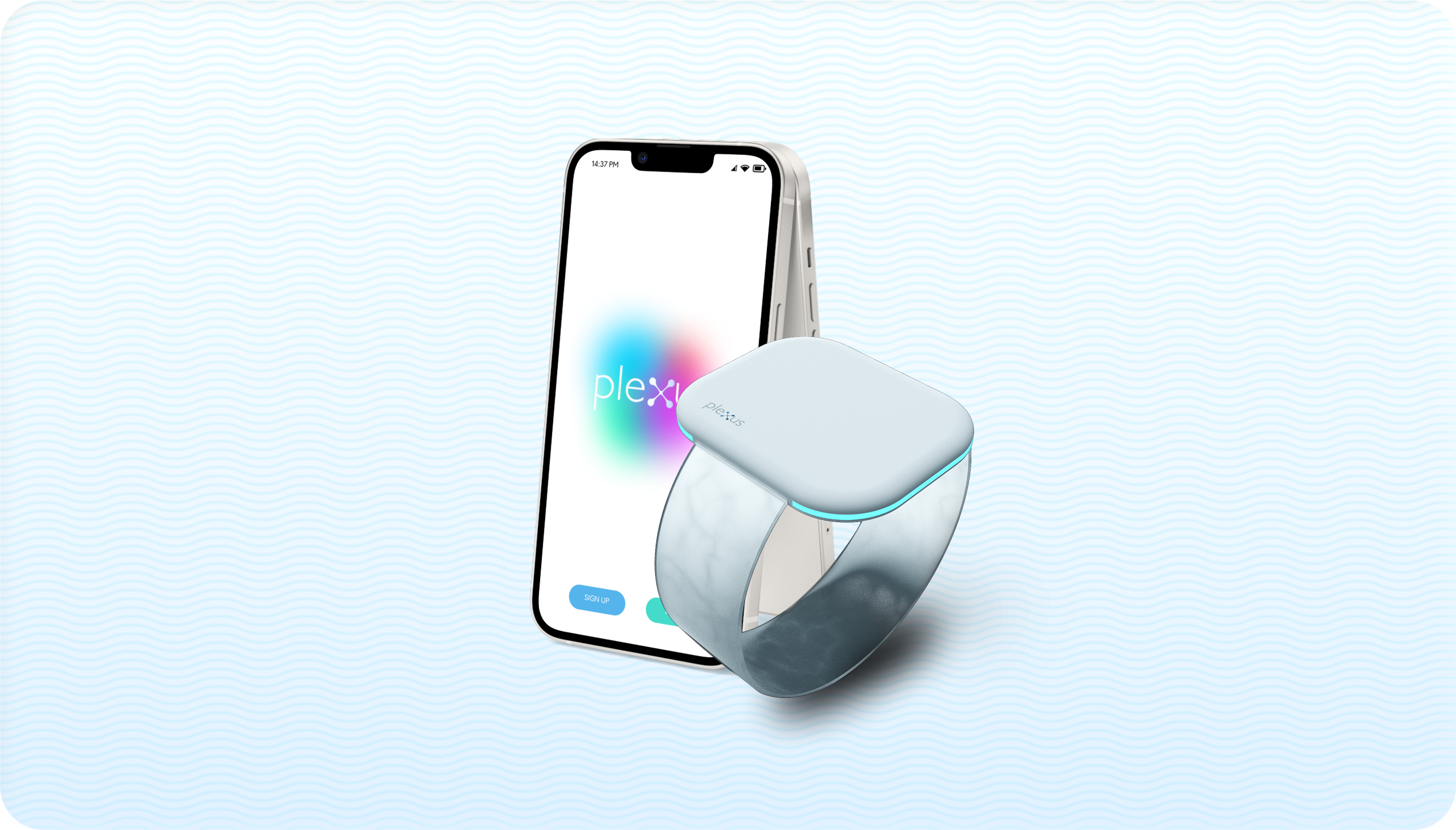
A medical wearable and connected mobile ecosystem for passive blood pressure monitoring - designed for the 1 in 3 Americans living with hypertension.
Hypertension is a silent chronic condition - symptoms don't appear until severe. Without continuous monitoring, neither patients nor physicians can understand patterns or prevent crises.
Managing chronic hypertension demands constant vigilance - daily measurements, medication adherence, and coordination with a care network. Today's tools make all of this harder than it needs to be.
Plexus monitors blood pressure around the clock using optical and oscillometric sensing - no button presses, no interruptions.
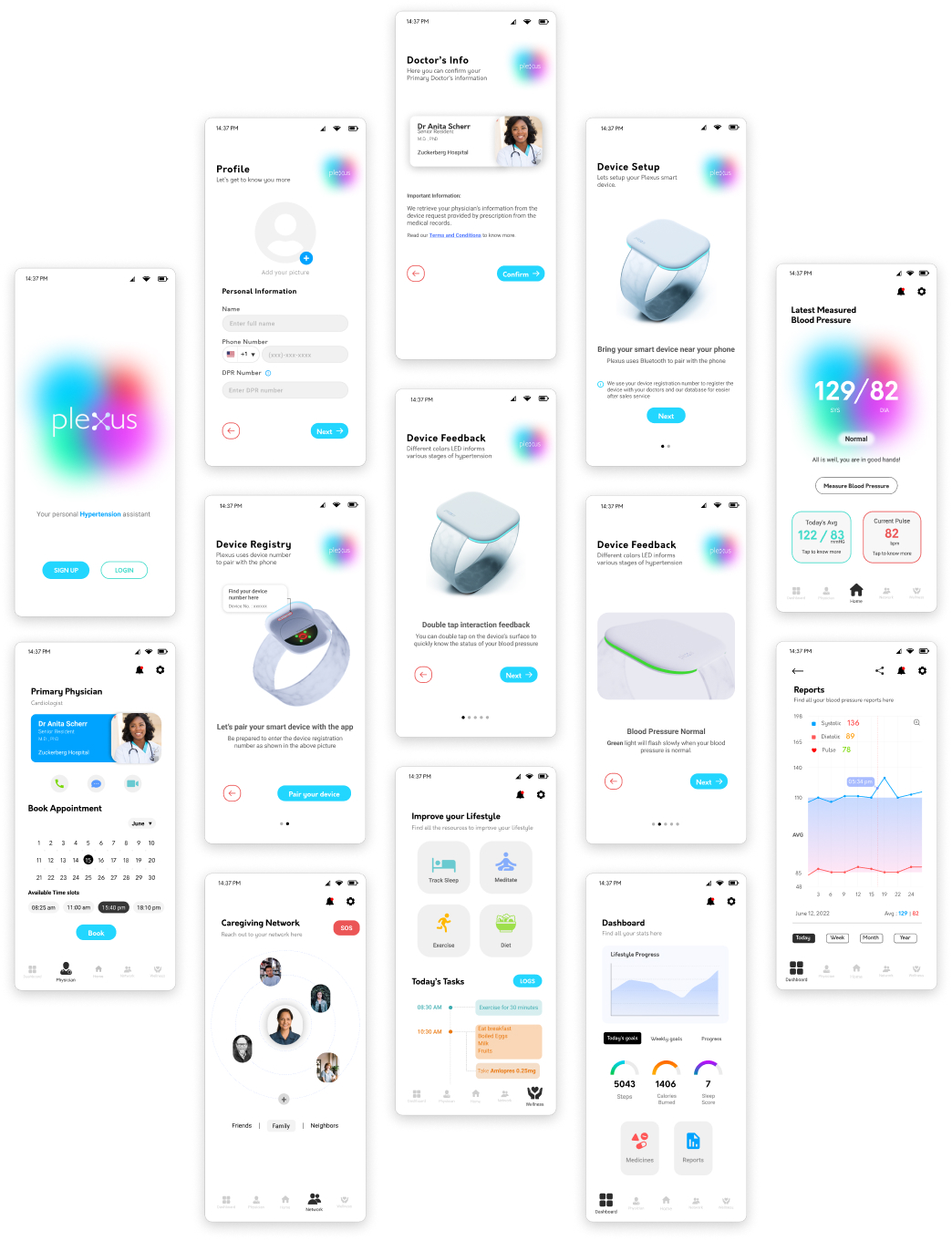
The companion app links patient, family, and physician in one shared view — enabling real-time awareness and proactive intervention.
Pattern recognition across time surfaces clinically meaningful insights - identifying trends before they become emergencies.
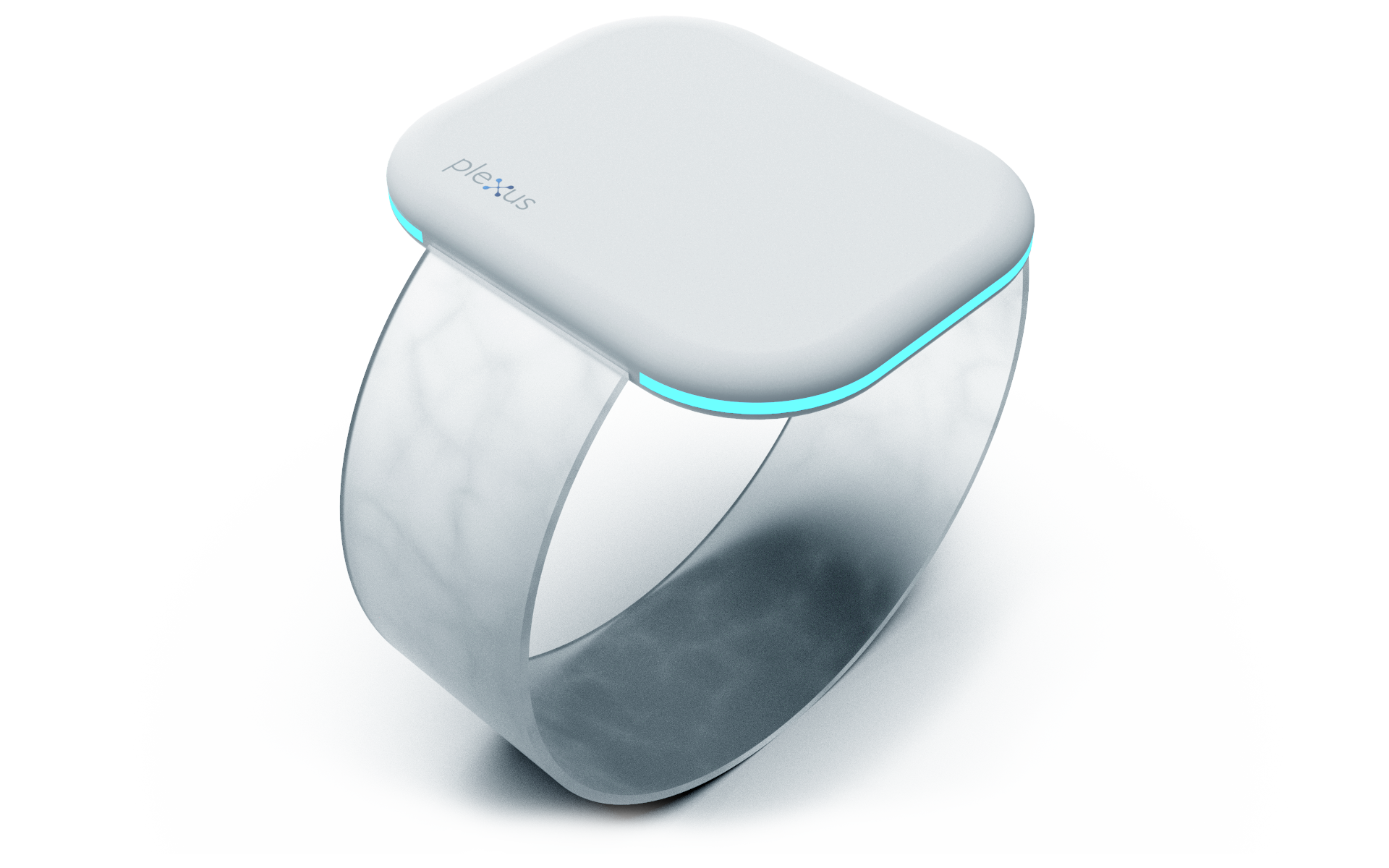
Designed to disappear into daily life. Worn on the wrist, the device features an LED channel that gives ambient feedback on blood pressure stages, battery levels, and device status - without demanding attention.
Qualitative research with patients, caregivers, and physicians surfaced distinct user archetypes - each with a different relationship to their illness, their care network, and technology.
My work hampers with daily life, adds stress to my lifestyle.
With my kids in other cities, I feel alone and fear for my hypertension, stresses me out.
Since I have aged, my health problems have increased and act on my irregular blood pressure.
Research with patients and physicians revealed consistent barriers - spanning monitoring, communication, and behavior change.
Blood pressure changes rapidly and needs 24/7 tracking for physicians to understand patterns - current tools require manual effort and create gaps.
Added life events - stress, pandemic, isolation - demand faster, easier communication between patient and care network that today's tools can't provide.
Chronic illness demands sustained behavior change, not just medication. Tools to meaningfully support healthy habits and close the loop with physicians are largely absent.
The research and interviews helped me understand what exactly patients are looking for to improve their battle with this chronic illness.
Multiple design directions explored - from data dashboards to physical device form factors - stress-tested against patient needs, caregiver workflows, and clinical requirements.
A closed feedback loop - device monitors, app surfaces insights, care network stays informed, physician acts proactively. Chronic care without chronic friction.