The Marine Mammal center
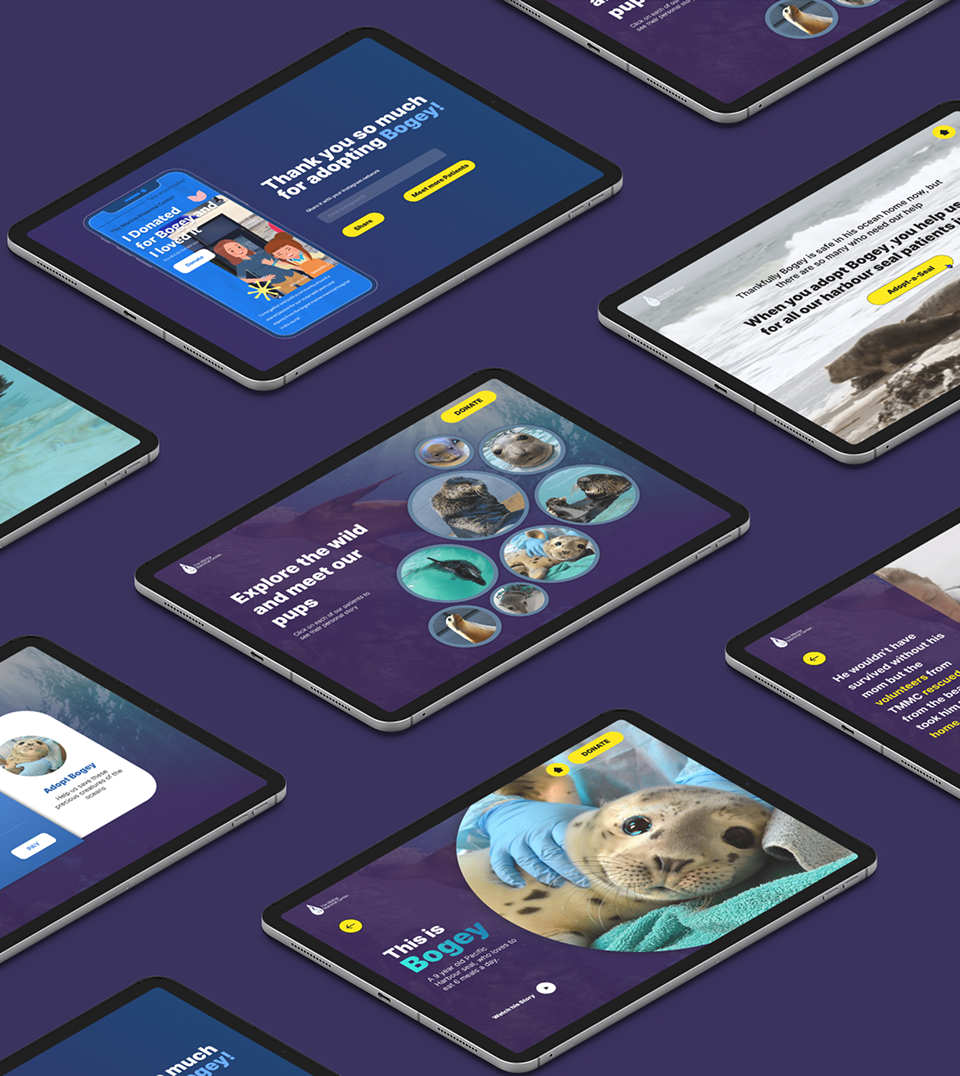
TMMC hero mockup
Client
The Marine Mammal Center
Role
UI/UX Designer, Experience Designer
Tools & software
Figma, Adobe Suite · Rhino 3D, Keyshot, Blender
Team
Team of 5
Time Frame
6 weeks

Turning quiet observers
into active advocates.

A tablet-led exhibit for The Marine Mammal Center, turning curiosity into empathy and measurable donations.

01 — The problem

TMMC is a health facility for sea mammals. Daily visitors come to observe — but they leave unmoved.

Improving the visitor experience to foster a stronger sense of connection and compassion is crucial to sustain the center's mission.

51.5%
Come after recommendations from friends and family
64.3%
Want to learn what TMMC actually does
78.6%
Expect a zoo experience, not a hospital
02 — Our mission

The world's largest marine mammal hospital reopened in June 2022. Our job was to make people care.

Our collaborative approach emphasizes the center's social impact, elevating awareness of their endeavors in marine conservation and ocean health — inspiring meaningful action and higher adoption rates.

How might we

Cultivate empathy among visitors through captivating narrative, and design impactful call-to-action elements for their experience at The Marine Mammal Center?

03 — The solution

A story-driven tablet, paired with a habitat installation.

// 01

Explore the patients' unique stories

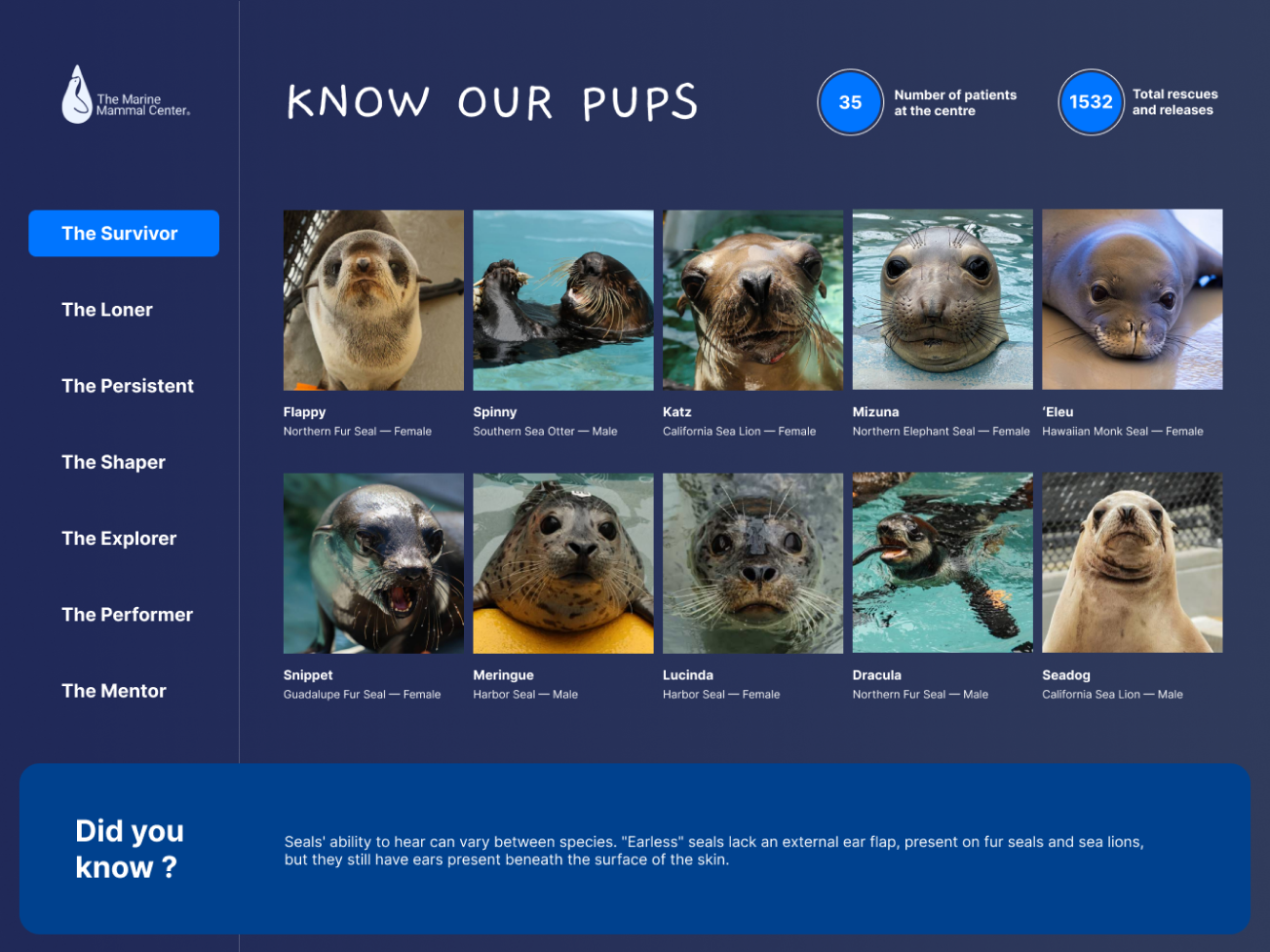
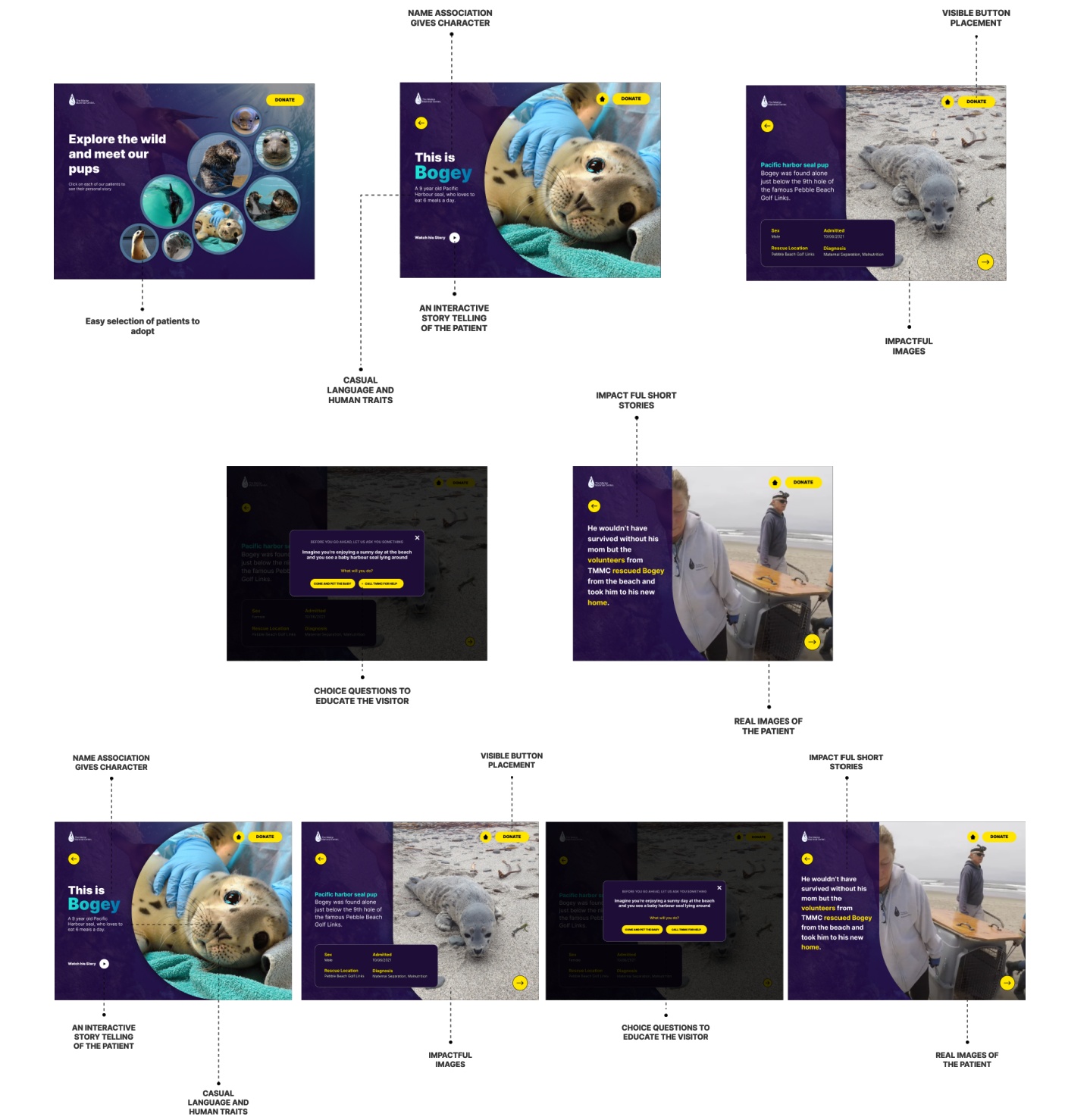
Visitors discover star patients' stories as they tap the bubbles — seeing how TMMC rescues animals through personalized choices in the story flow.

// 02

Adopt your favorite patients

Moved by the story? A symbolic adoption profoundly impacts marine mammals like Bogey, making a meaningful difference.

// 03

Leave with meaningful takeaways

Upon adoption, visitors receive warm thanks from patients and the center — photos to share or keep as memories.

Physical touchpoint

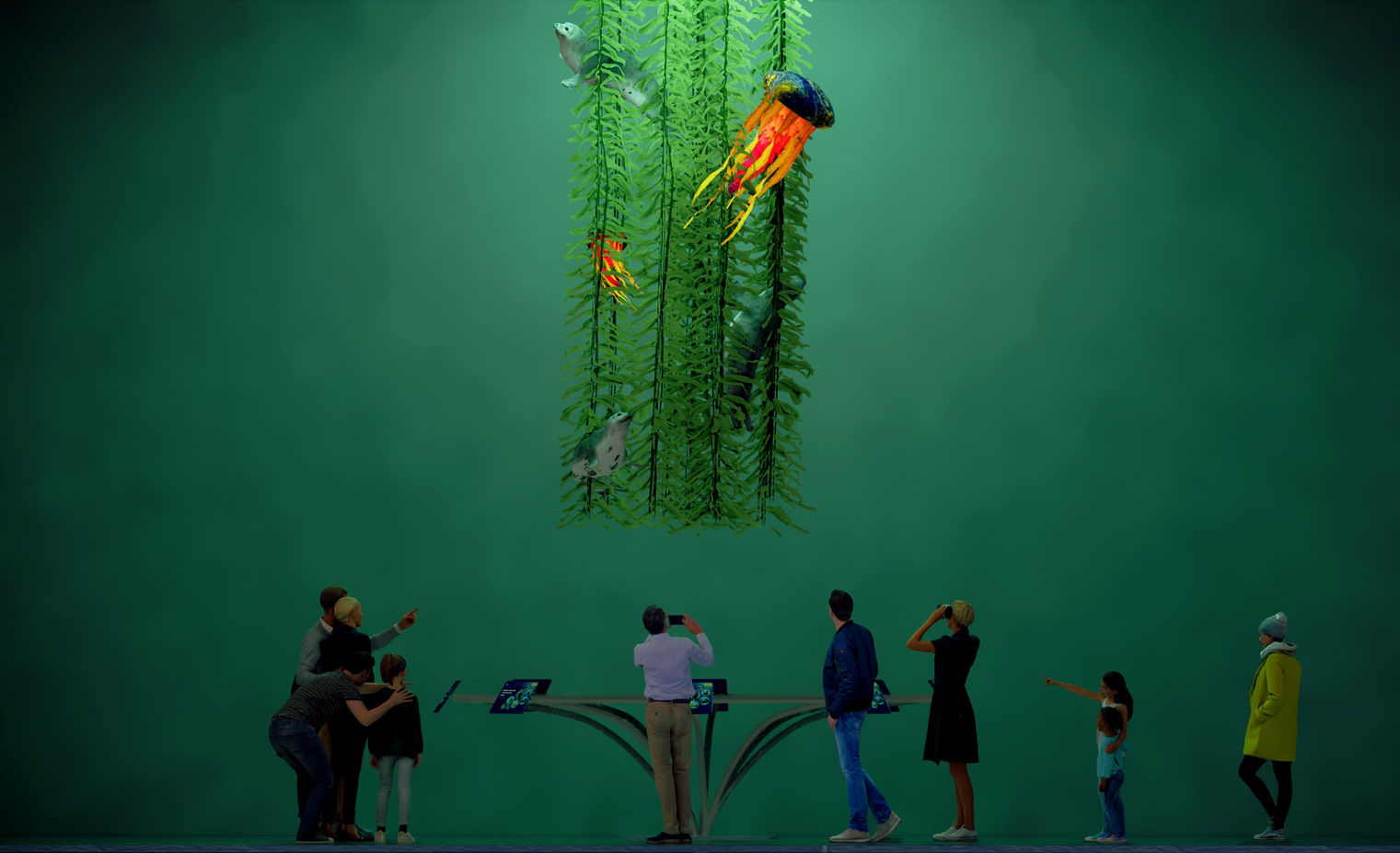
Habitat installation

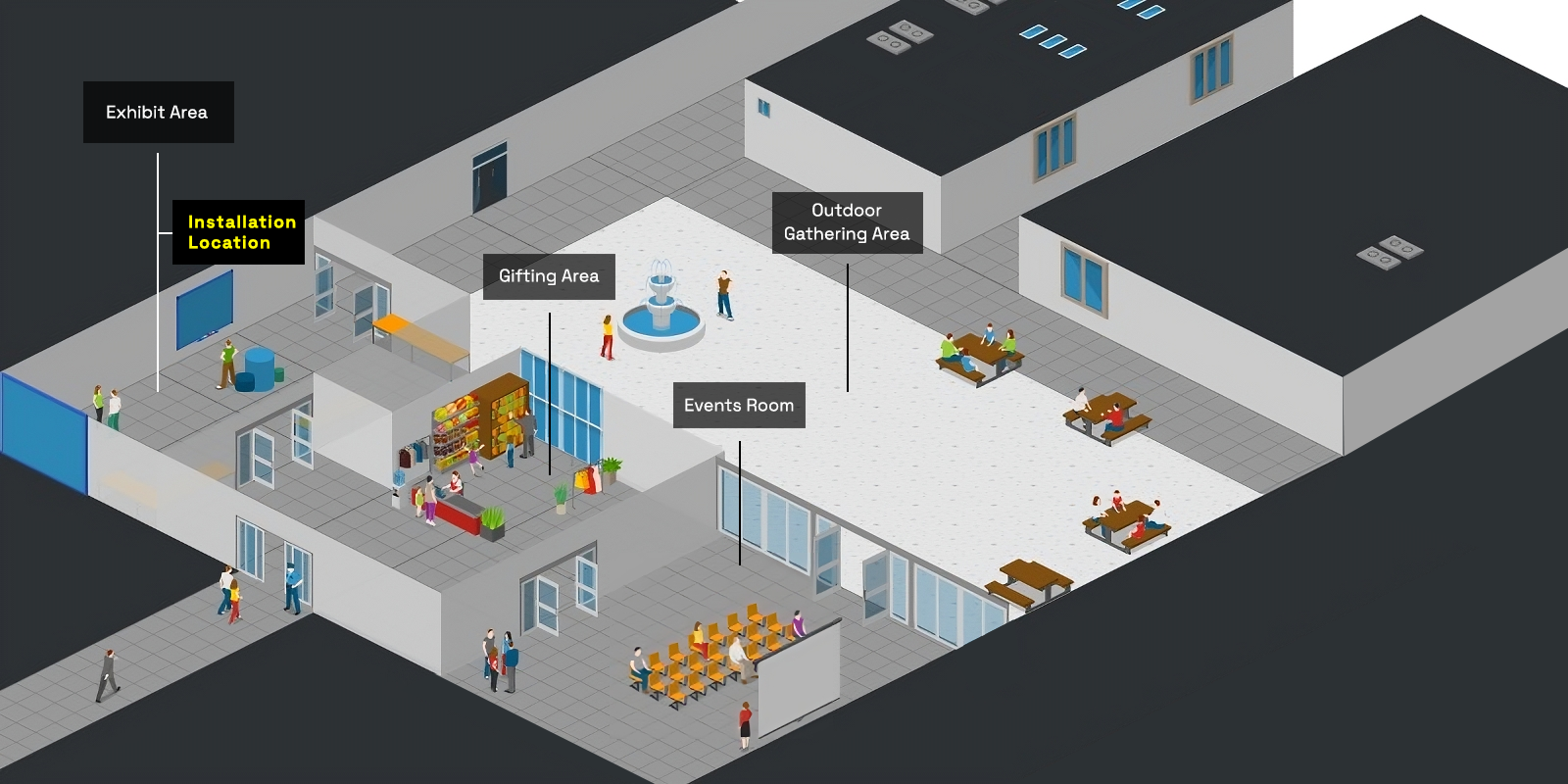
An art installation made of real materials showcases the marine mammals' habitat - tablets embedded into the environment so visitors can explore rescue stories while immersed in the habitat itself.

Sausalito, CA · Exhibit prototype

Habitat Installation Touchpoint

installation

Habitat Installation

Installation overview
01 / 06
Overview
04 — Design process

How did we reach here?

Qualitative and quantitative research with visitors and stakeholders, to understand their perspective on TMMC's mission and goals.

We wanted to see what it is like — the rescue process, what happens once the animal is admitted, and what their diagnosis is.

Visitor interview #1

I flipped over the adoption cards on the fence and saw dates from 10–15 years ago. Are these animals even still here?

Visitor interview #2

We're trying to reverse what human activity has done. Visitors want individual stories — how humans caused it, what NOT to do.

Stakeholder, TMMC
05 — Key identified gaps

Three pain points faced by visitors at The Marine Mammal Center.

The center has a wealth of learning resources, but the visitor journey leaves too much to chance. Three consistent gaps surfaced across interviews.

// 01

Guidance

A deficiency in thematic guidance during the visit renders it tough to depart with a profound effect.

// 02

Empathy

The existing storyline hinders visitors in both understanding and feeling a connection with the mammals.

// 03

Donations

Visitors are open to donating, yet they seek a transparent comprehension of purpose and impact.

06 — Solution explorations

Rapid prototyping, tested with 42 participants.

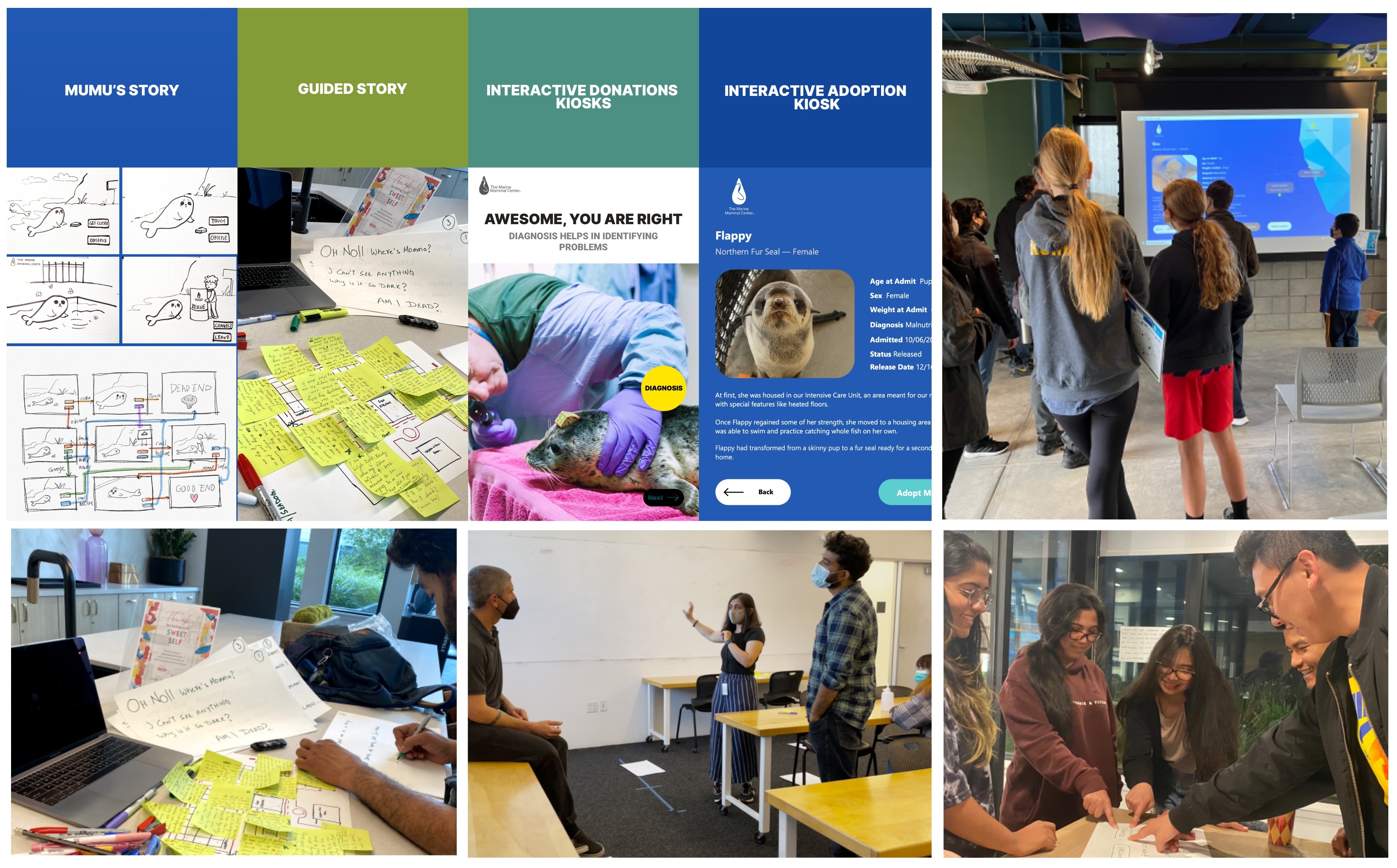
Five directions explored in parallel — from low-tech pledges to AR and live tracking — each stress-tested against empathy, guidance, and donation outcomes.
1st exploration

1st exploration

Early concept sketch anchoring the visitor journey - a narrative spine to test what moved people most.

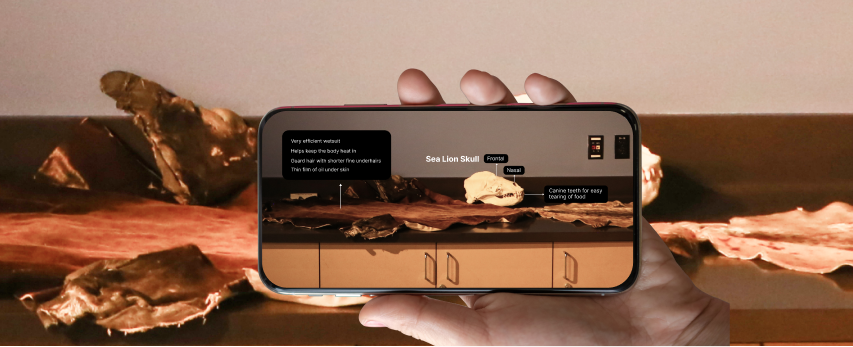
AR Tour Guide

AR Tour Guide

Augmented reality across the center — subtle animations bring artifacts and patient stories to life.

Live Location

GPS-tracked mammals after release, followed on a live map from rescue to ocean.

Pledge Wall

An interactive commitment display with a global map for gathering visitor information and intention.

Story Dashboard + Installation

Story Dashboard + Installation

Final

Tablets embedded in a habitat installation — adoption and stories in one flow. Selected as the final concept for build-out.

07 — Final direction

Story Dashboard + Art Installation.

Chosen based on time and budget constraints. From research, we grounded the experience in real-life stories — age, species, diagnosis, rescue and release locations — so every tap brings a visitor closer to one animal's journey.
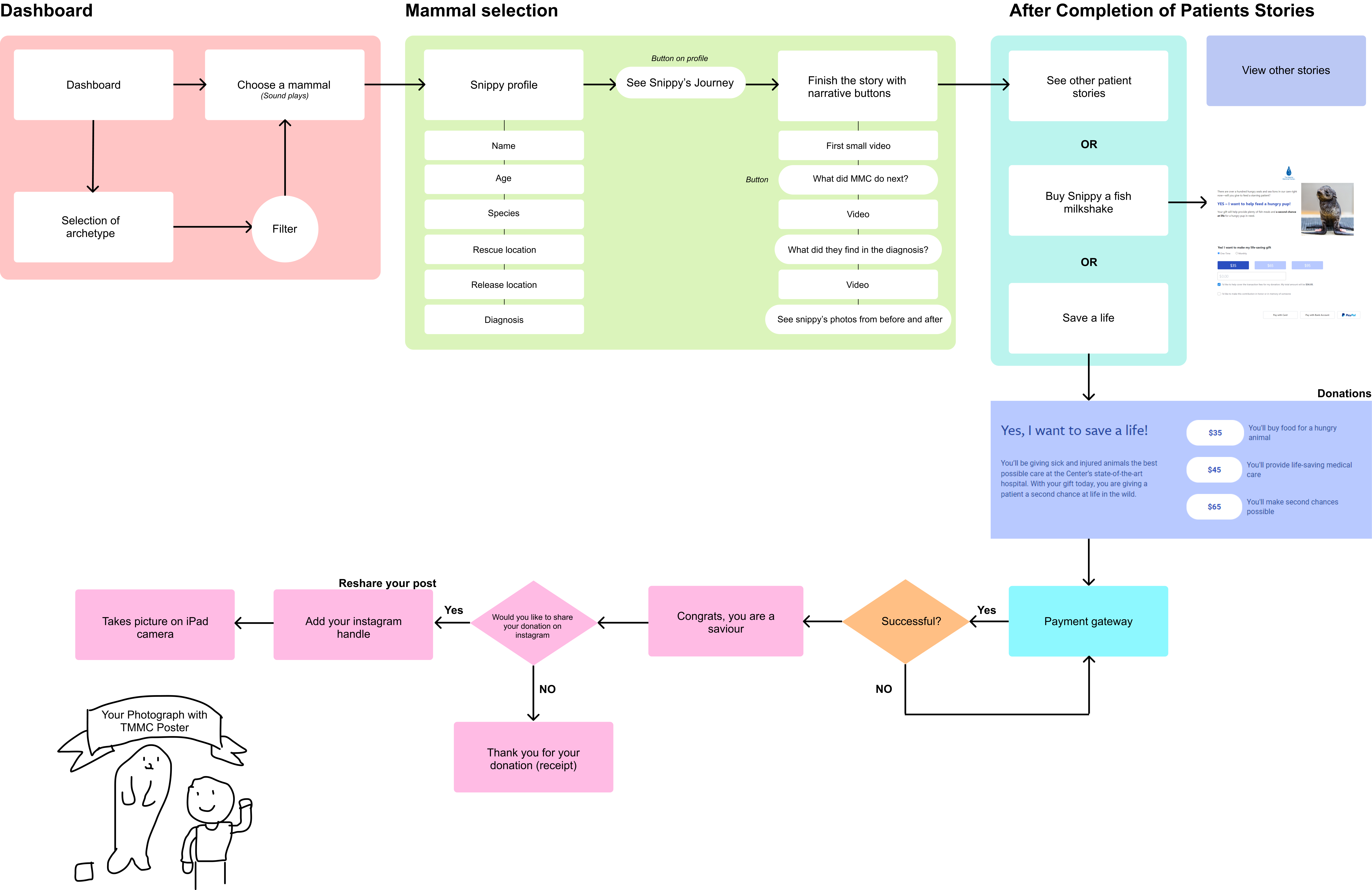
08 — User flow + IA

Mapping the visitor journey, rescue → release.

Mapping the visitor journey, rescue → release.
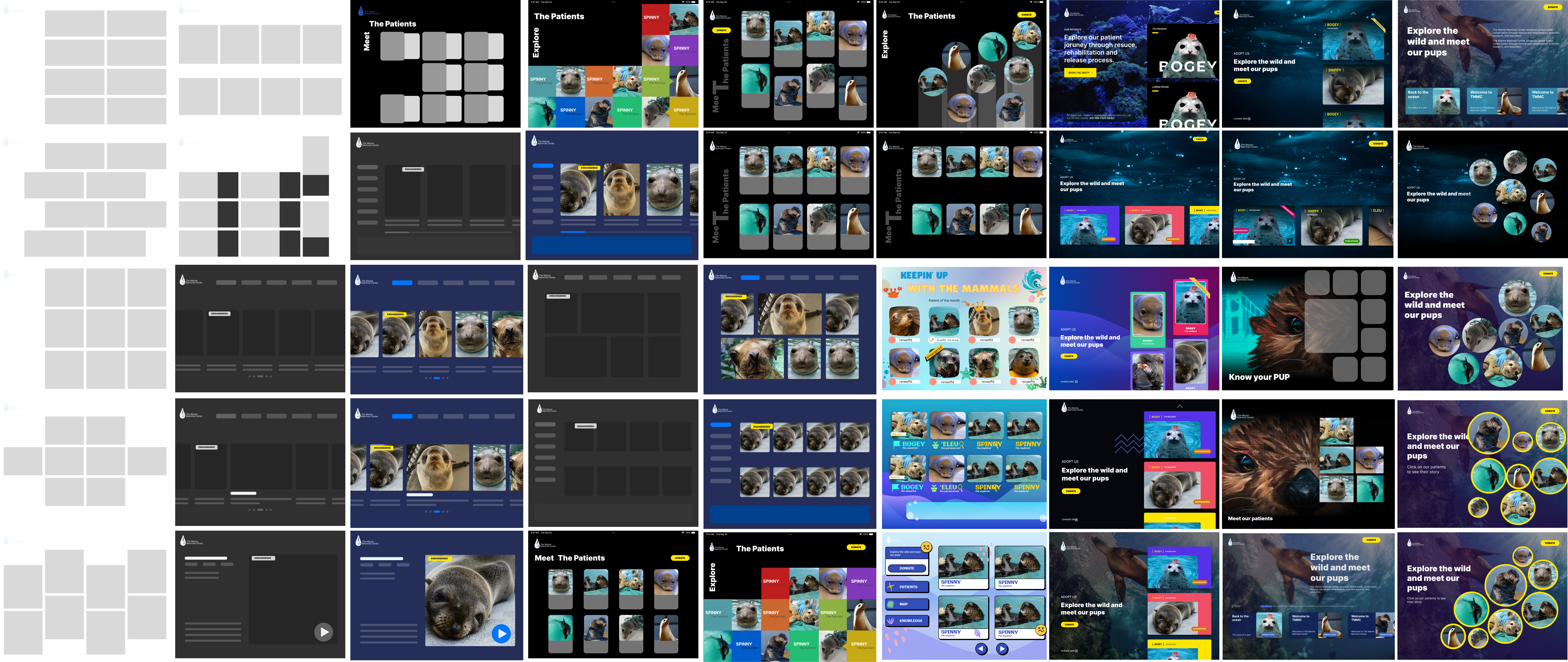
09 — Layout explorations

Iterating on hierarchy and visual density.

Iterating on hierarchy and visual density.
10 — Final screens

Built for touch, designed for empathy.

Final screen 1
01 / 02
Screen 01 / 02
11 — Learnings

Eight things this project changed about how we design.

01
Narrative beats information
Story-first flows moved people more than factual labels. People remember Bogey, not statistics.
02
Physical context amplifies digital
Tablets embedded in the habitat created deeper immersion. The environment is part of the interface.
03
Constraint clarifies the concept
Story Dashboard won not because it was most ambitious, but because it fit 6-week constraints while meeting all 3 goals.
04
5 parallel prototypes > 1 deep dive
Rapid parallel exploration tested with 42 participants surfaced insights a sequential process couldn't.
05
Donation intent follows emotional investment
Visitors were open to donating only after connecting to a specific animal. Empathy before ask.
06
The exit moment is as important as the entry
The thank-you photo and patient message shaped how visitors talked about TMMC afterward.
07
Stakeholder language unlocks design insight
"We're trying to reverse what human activity has done" reframed the HMW. Best brief came from listening, not designing.
08
Physical-digital handoff needs its own QA
Mistakes in Rhino/Blender installation model cascaded into UI. Hybrid projects need explicit alignment checkpoints.